
If you are based in Bangalore, chances are that you would have already visited half a dozen of the most touristy places to visit in India, as a lot of them are just 4-5 hours of drive from Bangalore – e.g. Mysore, Ooty, Coonoor, Kodaikanal, Wayanad, Munnar etc.
I have too, having the opportune luck of being based in Bangalore. And this time, it was Hampi.
Set in a rocky terrain, Hampi is a world heritage site recognized by UNESCO, as it used to be the capital of one of the most prominent 14th century empires in India – Vijaynagara Empire. Just from the sound of it, I was super-excited, as you may have already read in my Ladakh blog about my interest in old architecture. And this was the jackpot.
We were a group of 6 – Bhavna, me, Bhavna’s siblings, brother-in-law and her friend. We were at her brother-in-law Arjun’s place at Tumkur, chilling in a long weekend, when the idea suddenly came up. Hampi is just 275 km from Tumkur and connected by NH48 and NH50, both great highways for a drive. So, we started before dawn, on Arjun’s XUV 500, zooming through the broad 6-lane highway.
The drive was nice, although a little warm, riding mostly through plateau areas. We got our first scenic view at around 11am, near Danapuram, when we sighted hilly green meadows on both our sides. And within a few minutes… we saw a huge water body on our left.
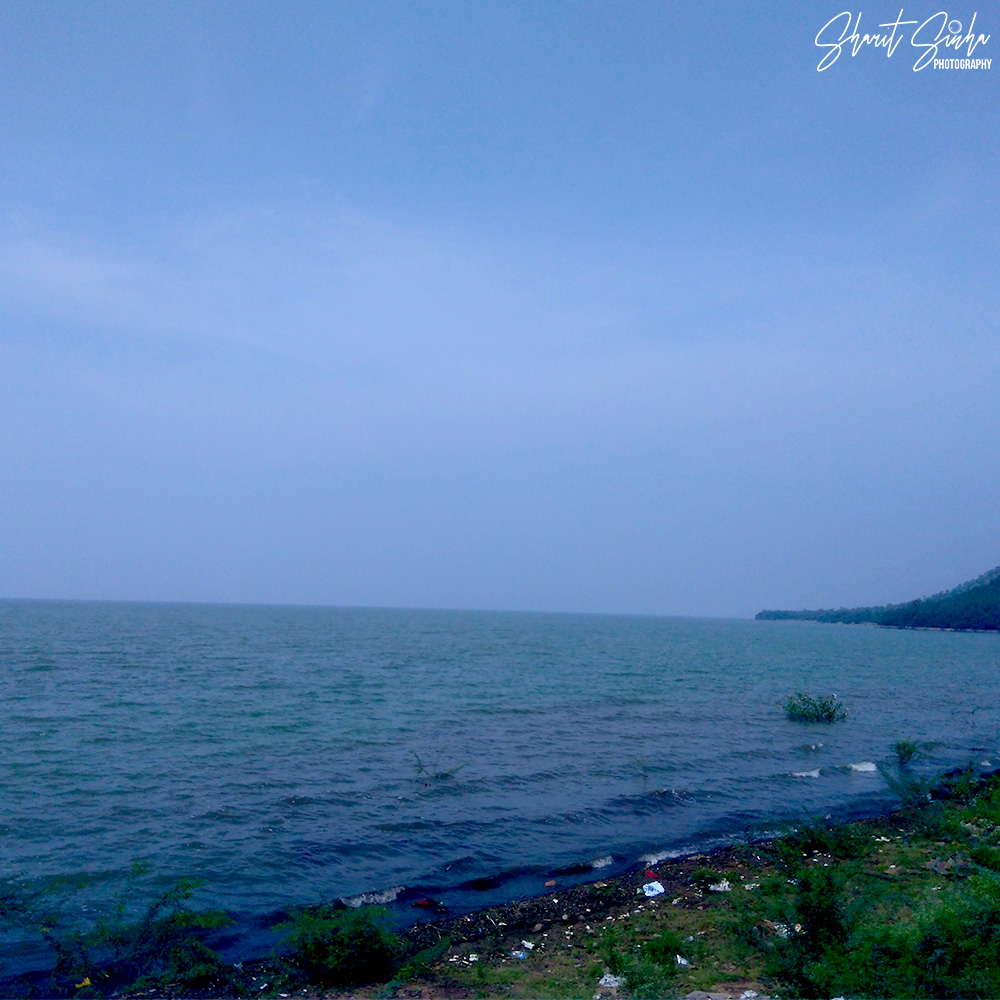
It wasn’t a river, it sure didn’t look like a lake, as we could see absolutely nothing but water beyond its horizons. For a second, we were disoriented, wondering whether we had driven to the coast by mistake. Google solved the dilemma for us and we realized it was the giant Tungabhadra Reservoir, also known as Pampa Sagar (aptly named), constructed across Tungabhadra river.
There was a small park constructed right by a shore of the reservoir, giving a nice view, but restricting direct access to the lake. We stopped there for a while and took in the unexpected but amazing watery view. We heard the Tungabhadra Dam would be even a greater sight, but we skipped the idea of taking a detour on our current route.
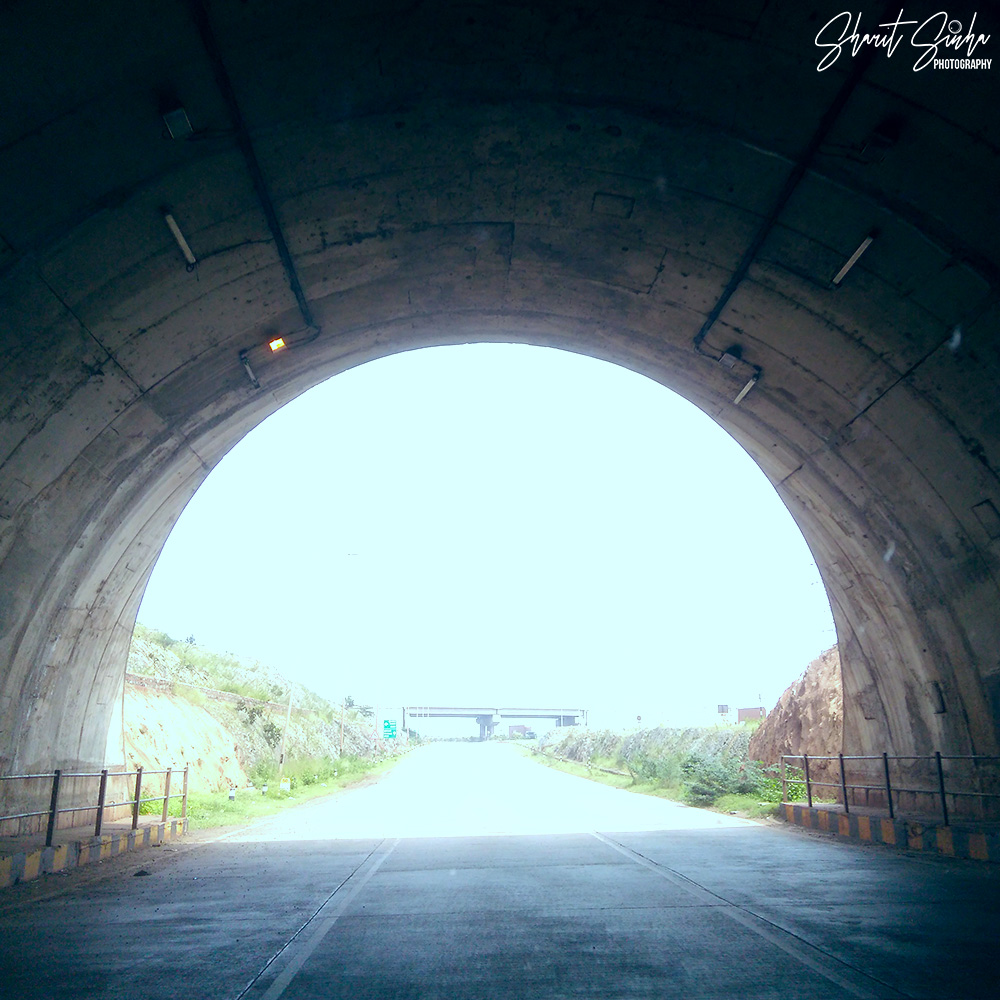
We resumed our journey through the green hills, shortly arriving at the popular Hospet tunnel, which has reduced a lot of traffic in this section since its construction. After a while we took an exit from the highway, leading us to Hampi.
We hadn’t booked a hotel in advance, and we were a big group, so our first concern was finding a place to dump our luggage. We reached the main Hampi archeological ruins complex at noon, finding ourselves in a large crowd of tourists, which essentially meant most hotels would be packed. Since it was just about the night, we found a humble hotel right in the middle of the Hampi complex and parked ourselves there.
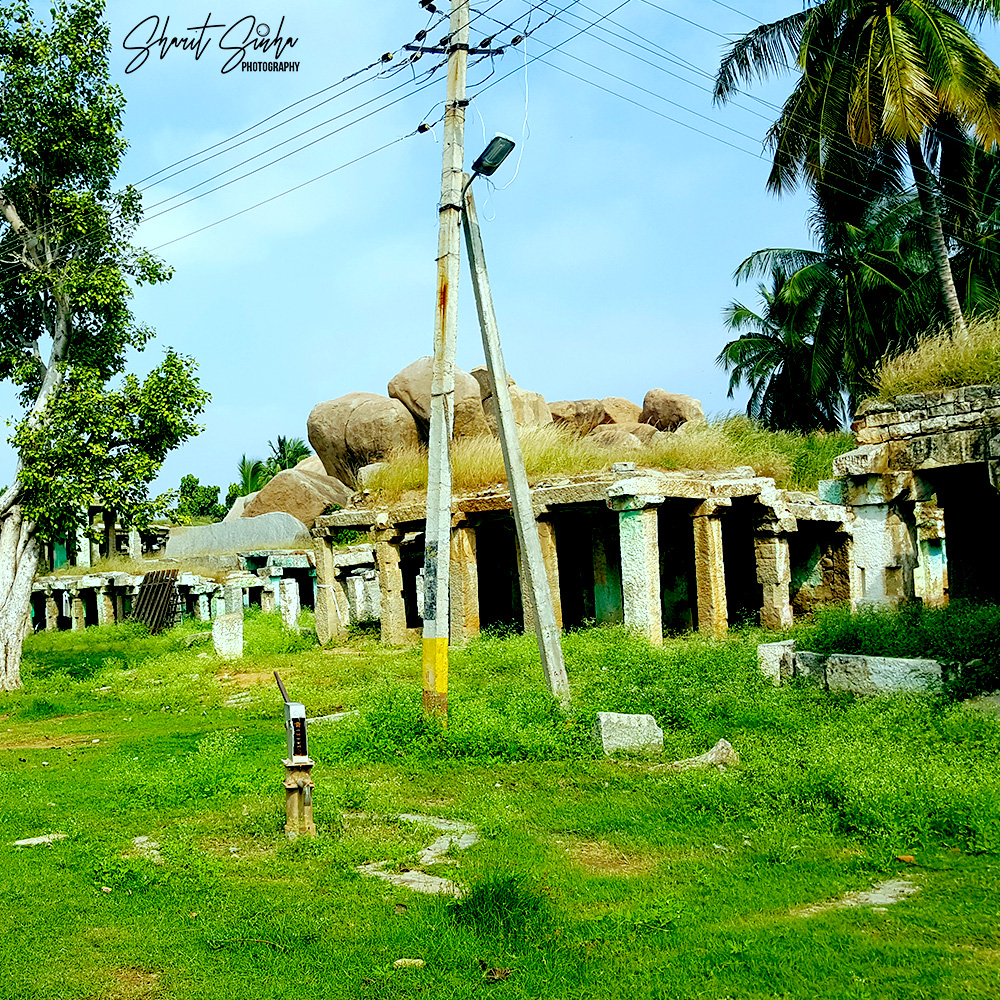
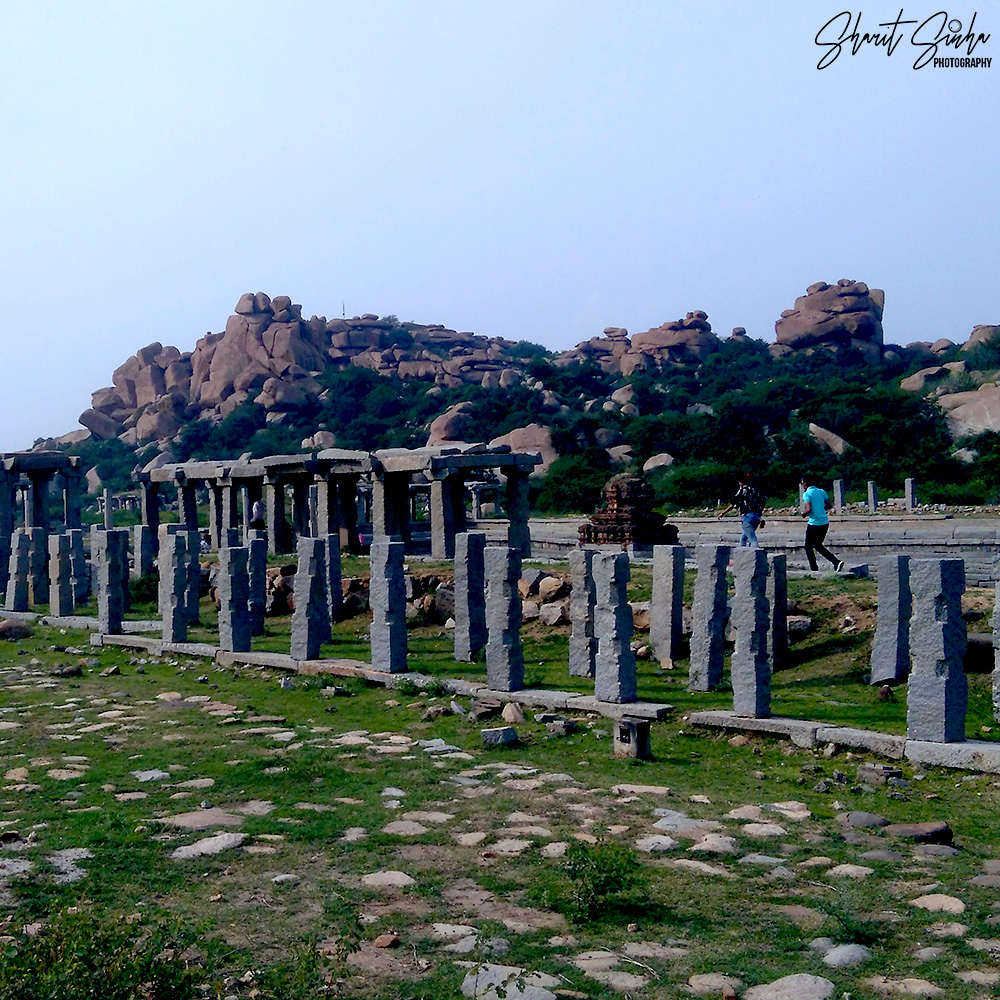
After freshening up and stuffing a good meal, we walked towards the old Hampi market or Virpuaksha bazaar. It was an old stone complex, almost a kilometer long, across the road that ultimately lead to Virupaksha temple. It was merely a long array of stone pillars, barely carrying the essence of the flourishing market it once used to be.
The temple looked partly under renovation, so we chose not to enter. The primary attraction we had in mind was Vijaya Vittala temple, which was a little far from here. So, we headed there without any further delay.
The road to the temple is constructed in such a way that you get a good view of other ruins of the historical city on your way. We marked a few places down, for a visit on our way back.
The last kilometer to Vittala temple is a pedestrian-only route, with an exception of a paid taxi service, that looked like an extra-long golf cart. We chose to walk the whole way instead. Although the main complex is centered around the temple in a closed compound, the actual complex spread far beyond.
We saw the still-standing pillars of what looked like a bathing complex, built around an artificial pond. There was a horse shade on the way. What probably looked like just stones of various shapes to most other people, was looking like the El Dorado to me as I imagined how they would have looked in their prime glory.
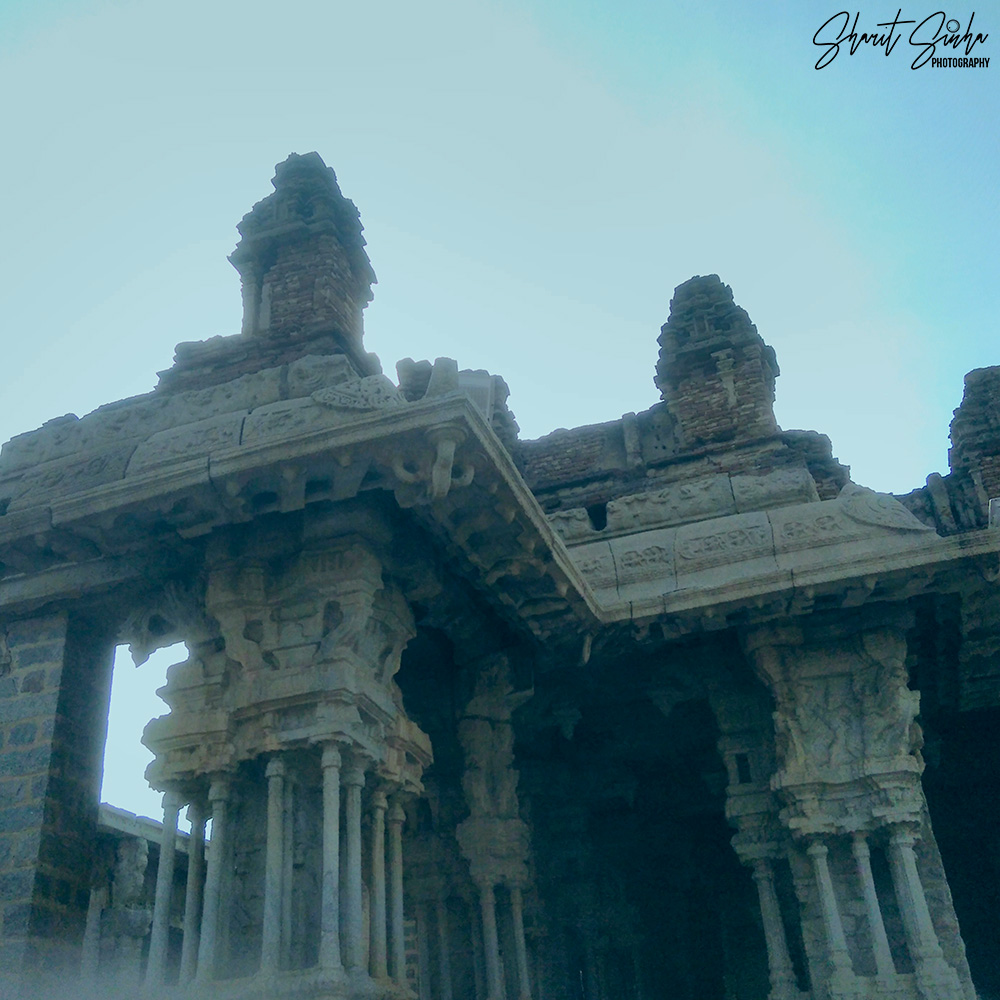
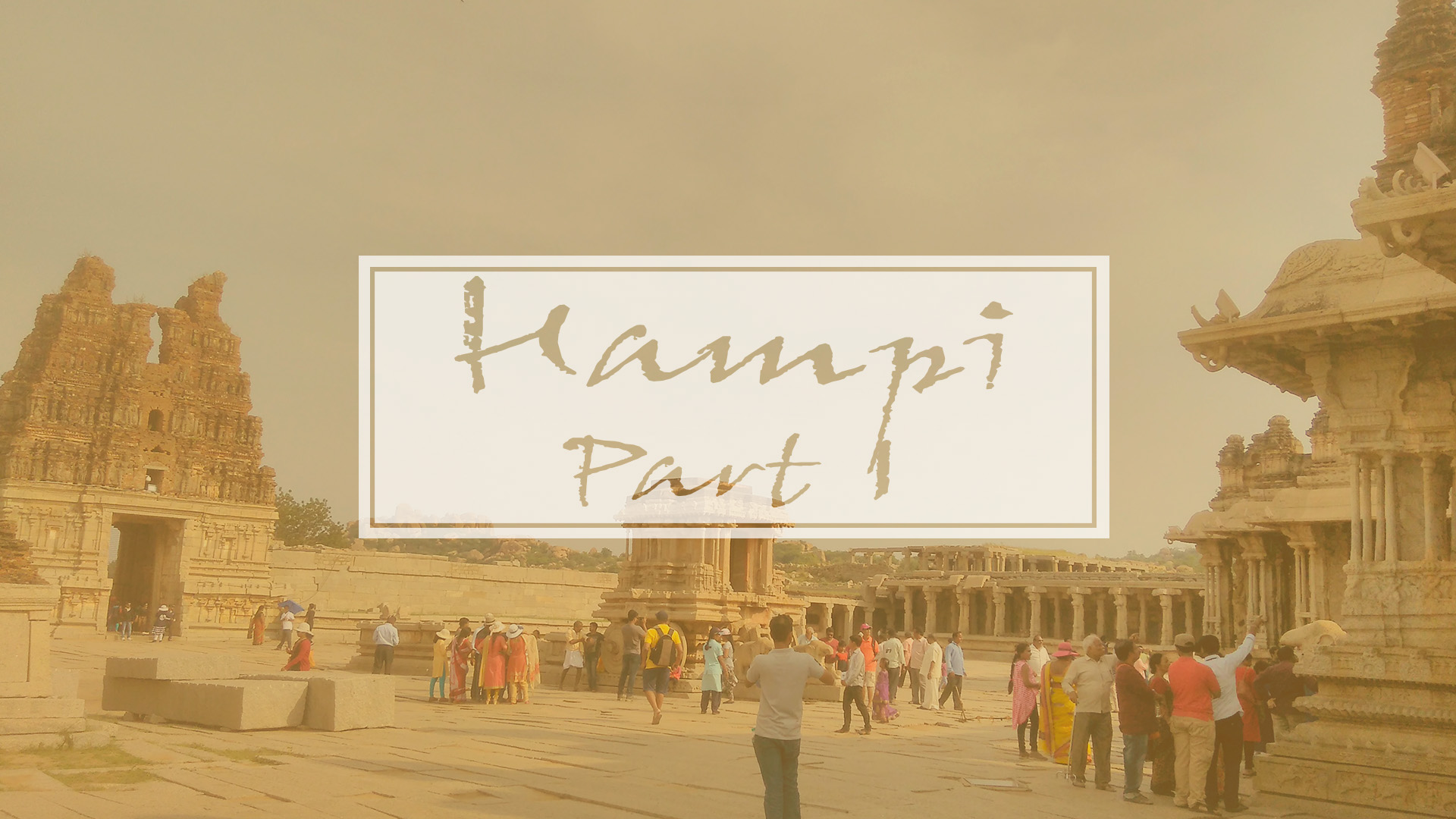
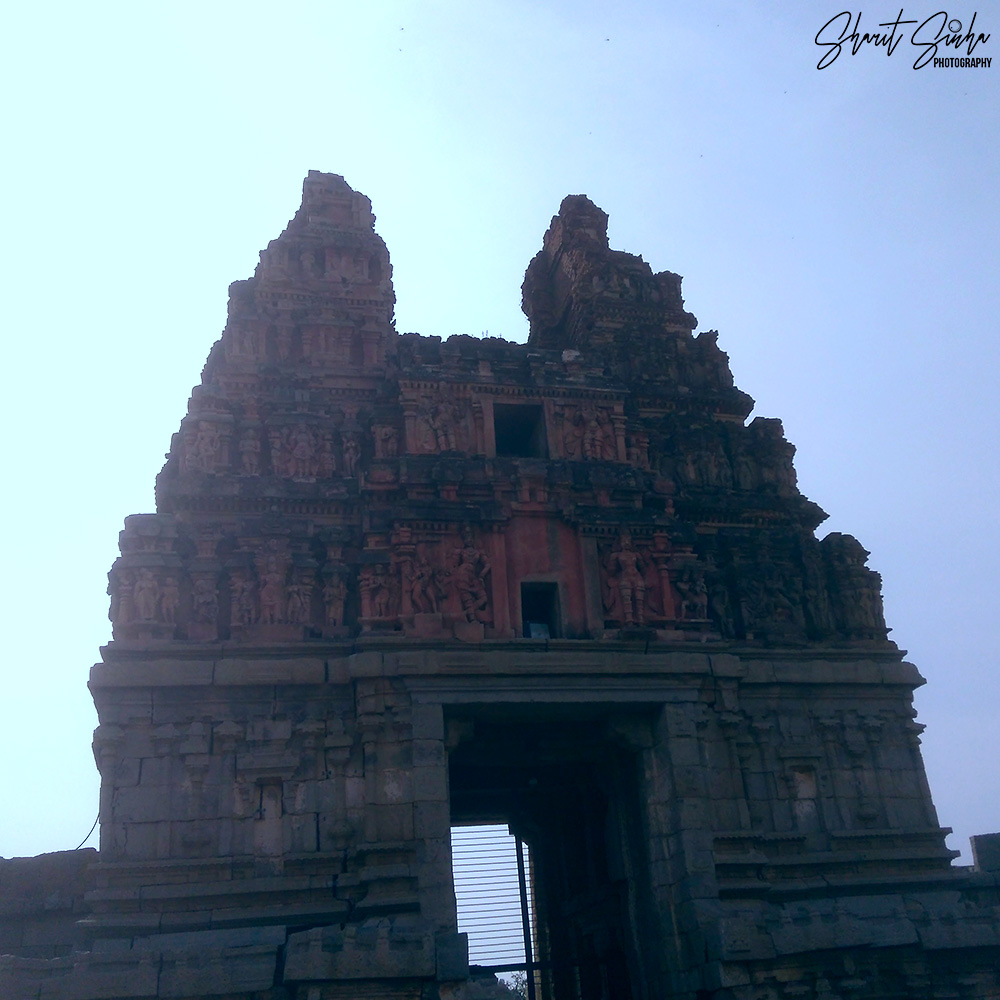
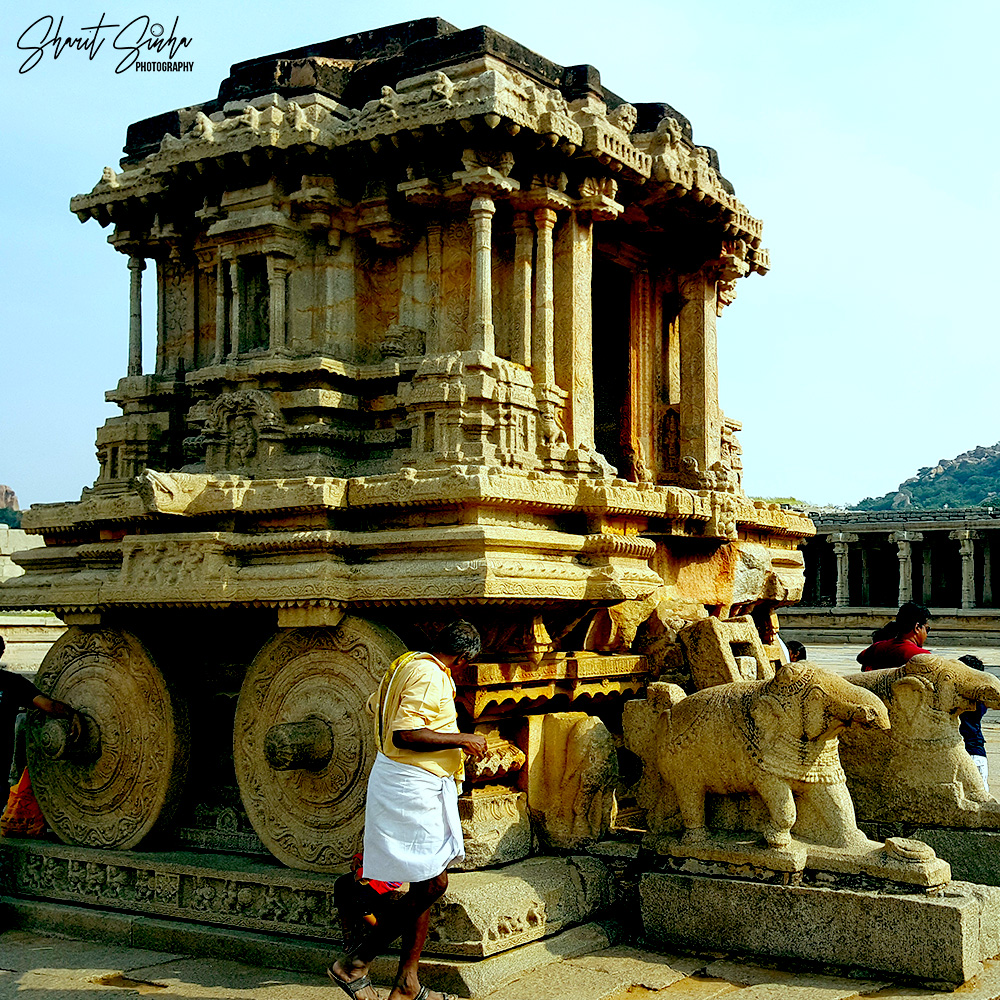
The temple compound itself is a huge complex, with multiple temples inside (cover image at the top). The central attraction being the sun-chariot that people flocked near to. It was an exquisite piece of Dravidian architecture, which felt like it could start rolling at any time on its large stone wheels. Apparently, the wheels did move, but was later cemented by government to prevent damage. We took some time appreciating the chariot, as well as the tall stone-carved gate.
On our right, right after we entered the complex, was the Ranga Mantapa or cultural hall, famous for its musical pillars. We followed a random guide’s instructions and tapped on the pillars… and were amazed to hear the subtle musical vibrations emitting from each. We were told, each pillar emitted a different note, but being musically untrained, we chose not to contest that.
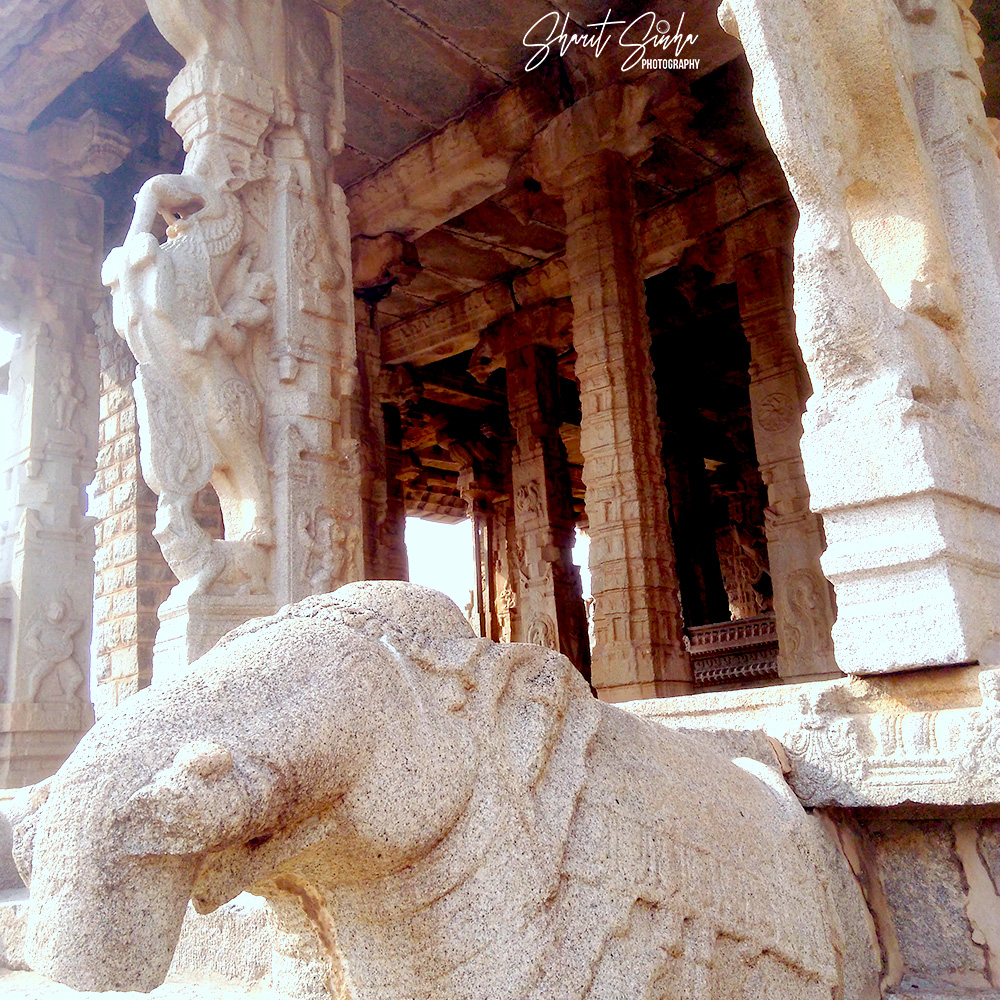
Then there was the large Maha Mantapa or the mega hall. Every inch of its stone walls, ceiling and pillars, were skillfully carved with images of deities and other creatures. I had never seen such a rich sculpting work and it completely mesmerized me. Although it was October, an almost-summer heat reflected from the stone walls of the hall… but I didn’t care.